Archive for category Uncategorized Archives

Work Stress and Cardiovascular Disease in Women

Graham Beaton BHSc, ND
Doctor of Naturopathic Medicine

High levels of stress have long been associated with increased risk of developing cardiovascular disease. Specifically, stress has been linked with increased blood pressure (i.e. hypertension), heart attacks, atherosclerotic disease (a thickening of arterial walls) and stroke. To date most of the research examining stress and cardiovascular disease has focussed on men, with little attention paid to females. However, a recent study published in PLoS ONE by Slopen et al. (2012) sought to determine if the chance of developing cardiovascular disease in women was dependent on types of work related stress experienced.

For the study, the researchers identified 22,086 eligible women (mean age 57 years) and had them fill out questionnaires to determine the level of stress participants associated with their employment. The participants were assigned to 1 of 4 categories according to their job responses:

  • Category 1 – Passive: A job of low demand and low control (control was defined as a combination of authority to make decisions and skill utilization)
  • Category 2- Active: A job of high demand and high control
  • Category 3- Low strain: A job of low demand and high control
  • Category 4- High Strain: A job of high demand and low control

Participants’ health was tracked for 10 years, and researchers noted cardiovascular events (including non-fatal heart attacks, non-fatal ischemic strokes, revascularization procedures (coronary artery bypass grafting and/or percutaneous transluminal coronary angioplasty)) and cardiovascular disease deaths.

Results of the study showed that women who were under higher levels of job related stress (i.e. those in the high strain and active categories), were 38% more likely to experience a cardiovascular disease as compared to women in the low strain category.

These results further reinforce the importance of monitoring and properly managing stress levels. To do so, it is important to be aware of one’s stress levels and find effective ways to cope (meditation/relaxation exercises, exercise, talking to others about stress, etc…). Furthermore, it is important to establish healthy habits, such as getting proper nutrition and enough sleep to be better equipped to face stress, and to ensure that cardiovascular risk factors (e.g. cholesterol, blood pressure, blood sugar, etc…) are monitored to reduce risk.

If you are concerned about stress or your ability to handle stress, or if you would like to know how naturopathic medicine can help, please give Graham Beaton a call at 613-290-6115. Graham is a naturopath practicing in downtown Ottawa.
Tags: , , ,

Should you check food labels when traveling?

Graham Beaton BHSc, ND
Doctor of Naturopathic Medicine

As people travel for summer holidays, they often find themselves eating out more than when at home. This can be a challenge for many who are on restricted diets (e.g. gluten free diets), for those who are trying to manage a specific condition (e.g. high cholesterol, blood pressure, diabetes, etc.) or for people who are trying to lose weight.

As people become familiar with the nutritional information detailed on labels of specific products, or on the menus at specific restaurant chains (e.g. Subway), they tend to make consistent choices. For example, they order the sandwich from the same restaurant chain that they ‘know’ is low in salt. But, is it ok to rely on one’s knowledge of brands when traveling outside of Canada (i.e. is it a given that a food has the same nutritional content across geographical areas?) To answer this question, Dunford et al. (2012) looked at the reported levels of salt in fast foods in six different countries (Canada, Australia, France, New Zealand, the United Kingdom and the United States).

The researchers found that there was great variability in the salt content of specific products in different countries. For example, Chicken McNuggets had 2.5 times more salt in McDonald’s restaurants in the United States as compared to those in the United Kingdom.

While researchers did not look at other nutritional information (i.e. calories, total fat, saturated, unsaturated and trans fat, etc.), it is possible that quantities of other nutrients also vary across and between countries. These variations can be explained by health initiatives that are put in place on a national, regional or city wide level (e.g., both the United Kingdom’s Food Standards Agency and the New York City Health Department have put forth initiatives to reduce salt).

Thus, what should you do? Remember to continue to check nutrition labels while traveling, even if it is a product that you normally consume as part of your healthy diet.

In my practice, I spend time with patients counselling them on nutrition and on how to properly read food labels.

I am a Naturopath in downtown Ottawa. For more information on food label reading, nutrition, high cholesterol, blood pressure, diabetes, weight loss, Naturopathic Medicine, or to book an appointment, please call 613-290-6115.

Fasting – Does fasting affect subsequent meal choices?

Graham Beaton BHSc, ND
Doctor of Naturopathic Medicine

Fasting for short periods of time is common in our society. People may fast for religious reasons, to prepare for blood work (lab tests) or surgery, for weight loss or to control weight, as part of a detox, or due to skipping meals because of lack of time. But what effects does fasting have on subsequent food choices? A literature search using Pubmed revealed the following recent studies on the subject:

  • A study by Wansink and colleagues in the June 25th, 2012 edition of the Archives of Internal Medicine. In this study 128 participants were recruited and randomly assigned to two groups. The first group was instructed not to eat or drink for 18 hours prior to the study – a lunch which took place at 12 pm. The second group was told not to fast and continue to eat their normal diet. A buffet consisting of 2 starches (dinner rolls and French fries), 2 proteins (chicken and cheese), 2 vegetables (carrots and green beans) and a beverage was presented to small groups of participants. Participants served themselves and the food that they chose was recorded by video cameras and weighed. Any food left over on participants’ plates was weighed at the end of the meal. In addition to the scales and video camera, participants completed a questionnaire after lunch in which they provided information on their food consumption prior to lunch (i.e. if they had fasted), and on the order that they had first tasted or eaten the foods that they had for lunch.

    The researchers found that those who fasted started their meals more often with high calorie foods (e.g. starches and protein) than those who did not. Also, participants tended to eat more of the food that they started with. Thus, if this was a starch, they ate more starches than if they had started with a different food.

  • Read the rest of this entry »

Caffeine – Does it protect against skin cancer?

Graham Beaton BHSc, ND
Doctor of Naturopathic Medicine

An interesting article was published in the July 1st issue of the journal Cancer Research. The researchers looked at coffee and caffeine consumption to determine if caffeine intake reduces the chances of developing basal cell carcinoma (BCC) (a type of skin cancer).

Using data from the Nurses’ Health Study (72,921 women) and the Professional Follow-up Study (39,976 men), researchers reviewed 112,897 questionnaires detailing participants’ lifestyles, diet and medical history. Researchers found that those who drank more than 3 cups/day had the lowest risk of developing BCC – reducing their relative risk by 17% (compared to those who drank less than 1 cup of caffeinated coffee per day). This positive effect was seen in both men and women (with women having slight additional benefits from greater caffeine intake).

Caffeine consumption in participants was primarily from coffee (78.5%), followed by tea (18%), cola (3%), and chocolate (0.5%). Reduction in risk of BCC was seen regardless of the source of caffeine. Moreover, caffeine appeared to be the source of the protection against the development of BCC, as consumption of decaffeinated coffee was not associated with a decrease in BCC risk. In contrast to the benefits of caffeine on BCC, it did not appear to have an effect on lowering the incidence of either squamous cell carcinoma or melanoma.

For more information on caffeine and BCC, click here for a link to the study, and for more on sun safety please click here.

Graham Beaton is a Naturopath practicing in Ottawa. For questions or to schedule an appointment, please call 613-290-6115.

Sun Safety for Summer

Graham Beaton BHSc, ND
Doctor of Naturopathic Medicine

Sun safety is an important factor to consider when planning for any outdoor activity during the daylight hours of the summer. As the sun continuously emits ultraviolet A (UVA) and ultraviolet B (UVB) radiation that penetrates the Earth’s atmosphere, both short term and long term exposure can result in many negative effects on skin health (including photoaging, burning, and skin cancer). This blog post will focus on the acute and chronic effects of sunlight on skin health, and explain the SPF ratings of sunscreens and UV index in order to improve understanding of sun exposure to skin health.

Acute effects of UVA and UVB radiation on the skin
Sunburn
A sunburn is a burn to the skin that is caused by exposure to ultraviolet rays of the sun – specifically UVB radiation (UVA radiation is a modest contributor to sunburns). A sunburn appears as a red, painful skin lesion that is also hot to the touch. This reaction is caused by multiple factors, including DNA damage, hormone activation, cytotoxicity, and others. The redness caused by UVB rays typically sets in 2 to 6 hours after exposure, peaks around 12 to 36 hours and fades after 72 to 120 hours.

There are many negative effects that happen in the skin after a sunburn, including: inadequate DNA repair, decreased immune response, damage to melanin cells (cells that affect changes in skin pigmentation), increased skin permeability, thickening of the skin, generation of damaging free radicals, increased release of pro-inflammatory and DNA mutation causing immune cells, etc…

Suntan
Tanning is a response where the skin darkens with exposure to ultraviolet (UV) rays. Interestingly, tanning is biphasic. After sun exposure, skin pigment darkens within minutes, followed by delayed skin pigment darkening 3 days after sun exposure. UVA rays are responsible for the immediate darkening of the skin, beginning approximately 5 minutes after skin exposure. UVB rays are responsible for the delayed skin pigment darkening, and this response peaks 5 to 10 days after exposure.

Chronic effects of UVA and UVB rays on the skin
There does not have to be a history of sunburn for the sun to have negative effects on skin health. Susceptibility to UV damage is influenced by age, anatomical site of exposure and by individual skin type, which can be categorized as:

I – Always burns; never tans
II – Often burns; tans minimally
III – Sometimes burns; tans moderately
IV – Burns minimally; tans well
V – Rarely burns; tans deeply; moderately pigmented (brown)
VI – Never burns; deeply pigmented (black)

Photoaging
Repetitive exposure to UV rays over long periods of time results in photoaging. These skin changes are different than normal aging of the skin and are characterized by dry and rough skin, wrinkling, spots or smears of color (called mottling), thinning of the skin, pebbling of the skin, presence of precancerous or cancerous lesions, etc… Furthermore, chronically exposed sites have fewer protective immune cells, increased skin thickness, reduced protective barrier abilities (to bacteria, fungi, parasites, viruses, heat, UV radiation, water loss), and have changes in the elastic properties of the skin.

Skin Cancer
Precancerous and cancerous lesions can develop due to UVA and UVB radiation. Rates of skin cancer are increasing for both non-melanoma skin cancers (basal cell carcinoma and squamous cell carcinoma) and for melanoma skin cancers. Currently, 1/5 of Americans and 2/3 of Australians born today will develop skin cancer at some point during their lifetime. Three main risk factors are thought to be responsible: increased UV exposure (through sunbathing and tanning bed use), aging of the population and ozone depletion (which now filters less UV rays). Risk of developing non-melanoma skin cancers increases in those who have greater UV exposure (increased time and UV intensity exposure), and increased history of sunburns.

Protection against UV radiation from the sun
There are many precautions that can be taken to reduce the harmful effects of exposure to UV rays from the sun. These include: use of sunscreens, avoidance of UV rays, wearing protective clothing, and following UV Index forecasts.

Sun Protection Factor
The Sun Protection Factor (SPF) of a sunscreen indicates its ability to protect the skin from UVB induced burns (note, unless otherwise stated, sunscreens are primarily designed to protect against UVB radiation and do not include UVA protection – for dual coverage, look for products labelled “broad spectrum”). It is defined by the ratio of ultraviolet rays required to produce a minimal erythema dose (i.e. minimal dose to cause skin to redden) in sunscreen protected compared to unprotected skin.

To determine the SPF rating of an individual sunscreen, 20 to 25 individuals with skin types I, II or III (see above) applied sunscreen on their backs from their shoulder blades down to their beltline. This area was then exposed to an indoor solar simulator and the average minimal erythema dose is taken to determine the SPF of the product. These results are limited in that testing conditions using the solar simulators differ from sun exposure – and can produce a falsely high SPF value. The factors that alter claimed SPF values include:

  • Amount applied: The amount of sunscreen applied to the skin to achieve the SPF value on the product (as determined through testing) is 2 mg/cm2 (an equivalent of 2 to 3 g or 0.07 to 0.11 oz to cover the face, ears, and backs of both hands). Most individuals when applying sunscreen typically apply 25 to 50% of the recommended amount, which decreases the SPF value by 50 to 80%.
  • Swimming and sweating: Both decrease the effectiveness of sunscreens. While many products claim they are water or sweat resistant, these claims are misleading as the sunscreen will not provide the same level of protection as suggested following sweating. Newer regulations regarding sunscreen labelling (at least in the United States as regulated by the FDA) will require manufacturers to list the duration that a sunscreen will remain effective when exposed to water or sweat. It is best to remember, if sweating heavily or swimming, reapply sunscreen often (e.g. reapply after swimming).
  • Toweling after swimming or sweating heavily: Towelling removes applied sunscreen from the skin.
  • Insect Repellant: Application of sunscreens when also using insect repellants containing diethyltoluamide lowers the effective SPF value of a sunscreen by 34%.

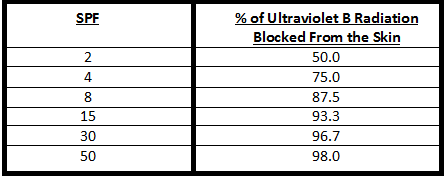
SPF values and sunscreen UVB radiation absorption
SPF rating and amount of UVB blocked from skin

New Rules of SPF labelling on sunscreens
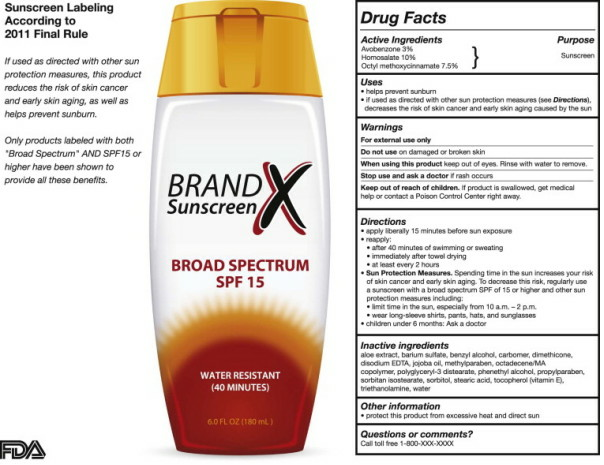
In June 2011 the US Federal Drug Administration (FDA) changed the regulations on testing and labelling of sunscreens (these changes were put in to effect for sunscreens sold in 2012)., in order to ensure that the public was better informed about product claims regarding SPF ratings, UVA and UVB protection, the proper use and application of sunscreen and misleading claims of “sweatproof” and “waterproof” sunscreens. The changes to labelling are as follows (note: the updated testing guidelines are not listed below):

  • Sunscreens that block both UVA and UVB radiation are labelled as Broad Spectrum and will carry an SPF rating of 15 or higher.
  • Products that are both Broad Spectrum and SPF 15 or higher will also inform consumers that they will protect against sunburn and if used as directed with other measures (i.e. wearing appropriate clothing, avoidance of sun during peak hours, seeking shade, etc.) can reduce the risk of skin cancer and early skin aging.
  • Sunscreens that are not Broad Spectrum and have an SFP value of 2 to 14 will carry a warning of “Skin Cancer/Skin Aging Alert: Spending time in the sun increases your risk of skin cancer and early skin aging. This product has been shown only to help prevent sunburns, not skin cancer or early skin aging”.
  • Instruction for applying sunscreen at least 15 minutes before sun exposure.
  • Instructions for reapplying sunscreen: re-apply at least every two hours, reapplying after swimming, sweating and after toweling dry.
  • A note on sun protection measures that reads: “Sun Protection Measures: Spending time in the sun increases your risk of skin cancer and early skin aging. To decrease this risk, regularly use a sunscreen with a Broad Spectrum SPF of 15 or higher and other sun protection measures including: Limit time in the sun, especially from 10 am – 2 pm; Wear long-sleeved shirts, pants, hats and sunglasses.”
  • Warning labels to include: “Do not use on damaged or broken skin; When using this product keep out of eyes. Rinse with water to remove; Stop use and ask a doctor if rash occurs.”

The FDA has also set rules for a sunscreen being labelled as “waterproof”, such that new products will contain information labelled “water resistant 40 minutes” or “water resistant 80 minutes”. Again, there are limits to this standard as testing environments (e.g. an indoor freshwater pool, whirlpool or hot tub with temperatures maintained between 23 to 32 degrees C) do not relate to normal sunscreen usage (correct amount of applied, length of time immersed in water, activity level in water, temperature of water, saltwater or chlorinated water exposure, sand abrasion and toweling). Again, it is then advised to reapply after swimming, sweating or towelling.

In addition to the changes in labelling listed above, the FDA also suggests limiting the maximum SPF to a SPF of 50 as there is insufficient evidence to show that products rated higher than SPF 50 provide greater protection for users as compared to SPF 50.

An example of the updated label:

Original Image and more information can be found at: http://www.fda.gov/drugs/resourcesforyou/consumers/buyingusingmedicinesafely/understandingover-the-countermedicines/ucm239463.htm

With a quick read of the website of Health Canada, it appears that these new guidelines have not yet been adopted in Canada, as the information on sunscreens, and labelling was last updated in 2010. Also, a Coppertone sunscreen that I purchased in May of 2012 in Ottawa did not have the updated labelling.

UV Index
The Ultra Violet index (UV index) is a measure of the intensity of the ultraviolet rays emitted from the sun. The scale ranges from 1 – 11 (in Canada), and the higher the number, the stronger the sun’s rays (which increases risk of burns). Forecasts of the daily UV index predict the maximum strength of the UV rays during the day – typically occurring in early afternoon.

The scale, as well as recommendations for protecting yourself from UV rays are as follows:

  • UV Index 1 to 2 – Low: Minimal sun protection required for normal activity. On bright days, wear sunglasses and cover up and use sunscreen if outside for more than one hour.
  • UV Index 3 to 5 – Moderate: Take precautions if outside for 30 minutes or more. Precautions include covering up, wearing a hat, sunglasses and sunscreen. Also, look for shade near midday when the sun is strongest.
  • UV Index 6 to 7 – High: Protection is required. Reduce sun exposure between 11 am and 4pm. Protections should include covering up, wearing a hat, sunglasses and sunscreen.
  • UV Index 8 to 10 – Very High: Take extra precautions. Avoid sun between 11 am and 4 pm. Take full precautions by covering up, wearing a hat, sunglasses and sunscreen. Skin that is not protected can be damaged and can quickly burn.
  • UV Index 11 and above – Extreme: Take full precautions. Avoid sun between 11 am and 4 pm. Cover up, wear a hat, sunglasses and sunscreen. Skin that is not protected will be damaged and can burn in as little as a few minutes.

Sun Safety Tips
As noted above, acute and chronic exposure to sunlight can have many negative health effects. It is therefore important to practice sun safety by:

  • Monitoring the UV Index forecast and planning your outdoor activities accordingly.
  • Avoid being in direct sunlight during peak sunlight hours.
  • Covering up by wearing long sleeved shirts, pants, and hats during peak sunlight hours.
  • Choosing the appropriate sunscreen, applying it and reapplying it properly.

If you have questions on sun safety, skin health, or on how Naturopathic Medicine can help you please give Graham Beaton a call at 613-290-6115. Graham is a Naturopathic Doctor practicing in the Glebe neighbourhood of Ottawa.

How Much Exercise Should I Get?

Graham Beaton BHSc, ND
Doctor of Naturopathic Medicine

A few patients of mine have recently taken up running as a way of getting more physically active and improving their health. Along with their new activity has come the question: “How far/fast/frequently do I have to run for it to benefit my health?” Read the rest of this entry »

Water Intake and Diabetes Risk

Graham Beaton BHSc, ND
Doctor of Naturopathic Medicine

An obvious conclusion was recently reached in a study that followed 82,902 women for more than a decade (as part of the Nurses Healthy Study). It found that women who chose to drink water instead of sweet drinks (i.e. sodas or fruit juices) had a slightly lower risk of developing diabetes.

While it was not the drinking of water itself that helped (regardless of the volume of water consumed), it was making a choice of an alternative to sugary beverages. By exchanging even 1 cup of pop or juice for water, the risk of developing diabetes fell by 7 or 8% respectively.

The message is clear – by cutting back or eliminating unhealthy sugary drinks you can reduce your chances of developing diabetes – potentially allowing you to live a longer healthier life.

Graham Beaton is a Naturopath practicing in the Glebe neighborhood of Ottawa. If you have questions on heart health, how Naturopathic Medicine can help you or on another health concern, give him a call at 613-290-6115.

Does Exercise Always Improve Cardiovascular Risk?

Graham Beaton BHSc, ND
Doctor of Naturopathic Medicine

An interesting article was recently published on PLoS ONE (Public Library of Science) on adverse changes to cardiovascular risk markers (plasma HDL-C, triglycerides, fasting insulin and resting systolic blood pressure) with regular exercise. The authors found that across several studies (e.g. HERITAGE Family Study, DREW, INFLAME, STRRIDE, University of Maryland Gene Exercise Research Study, and University of Jyvaskyla Study) some participants had adverse cardiovascular risk factor responses to regular exercise.

While previous research has consistently shown that exercise lowers triglycerides (a type of fat found in circulation), systolic blood pressure, fasting insulin and raises HDL-C (good cholesterol), new evidence suggests that the healthy benefits of exercise are not seen in all individuals. In some people, the opposite happens – and this effect has been seen regardless of the intensity of exercise. In addition, about 7% of participants in the studies reviewed also experienced an adverse response in two or more risk factors.

It is not currently known why exercise has a negative influence on some of the participants, but a genetic predisposition might be the cause. Currently it is also unclear what effect, if any, these adverse responses have on health outcome (heart attack, stroke) as the studies only looked at risk factors at a specific moment in time (i.e. they did not follow participants over a long period of time).

While this study did show unexpected cardiovascular responses in certain individuals, it reinforces the importance of monitoring risk factors, especially when starting a new exercise plan.

Keep in mind, exercise is still safe and healthy – and these new findings should not be
used as an excuse to avoid starting or maintaining an exercise program. They are just a reminder that all interventions have possible side effects, and a reminder to get cardiovascular risk factors screened regularly.

Graham Beaton is a Naturopathic Doctor practicing in the Glebe neighborhood of Ottawa. If you have questions on heart health, how Naturopathic Medicine can help you or on another health concern, give him a call at 613-290-6115.