
Archive for category Uncategorized Archives

Exercise During Pregnancy and Infant Brain Development

Exercise and physical activity have been found to be important to improving one’s general health and in reducing risk of developing different diseases. Recently, there has been an increased amount of research looking into the effects of exercise during pregnancy on newborns. Two such studies were presented at the 2013 Society of Neuroscience’s annual conference in San Diego. Specifically, they looked to determine the effect of exercise during pregnancy on infant brain development. Taken together, results suggest that physical activity has a beneficial impact on brain development for children.

Study 1 – Maternal exercise during pregnancy improves object recognition memory in adult male offspring

Researchers from Dartmouth College in New Hampshire used Long Evans rats as subjects to examine the effects of maternal exercise on memory in their adult male offspring. In particular, pregnant female rats were divided into two groups following conception. In one group, exercise wheels were placed in their cages and the pregnant rats were free to exercise. In the second group, the pregnant rats were placed in cages that did not contain an exercise wheel. After the offspring were born, the wheels were removed from the cages of the “exercise” group and the rats in both groups remained with their mothers until they were weaned.

At 60 days post birth the ability of the male offspring to recognize objects from memory over a period of 24 hours was assessed. Findings revealed that rats whose mothers exercised during pregnancy, were better at recognizing objects, demonstrating improved memory, compared to rats whose mothers did not exercise during pregnancy. Moreover, rats whose mothers exercised were better able to recognize objects two weeks later, demonstrating improved long term memory capabilities.

Study 2 – Foetal brain development is influenced by maternal exercise during pregnancy
In this study, researchers at the University of Montreal recruited women who were in their first trimester of pregnancy and randomly assigned them to either an active (minimum 20 minutes of low intensity exercise 3 days per week throughout their pregnancy) or to a sedentary group, who did not exercise.

A short time after the children were born (e.g. 8-12 days), the electrical activity of the children’s brains in response to auditory cues were examined using EEG (i.e. electroencephalography – which uses electrodes placed on the scalp to measure underlying brain activity). Results of the study showed that exercise had a beneficial effect on the brain of the newborns such that infants born to active mothers had brainwave patterns that indicated that their brains were more mature compared to infants born to inactive mothers.

In conclusion, physical activity during pregnancy has been shown to benefit the brain development of newborns. These studies further reinforce the importance of physical activity and the role it plays in promoting and maintaining health.

Graham Beaton is a Naturopathic Doctor practicing in Ottawa. If you have questions about how Naturopathic Medicine can help during pregnancy, about prenatal health or for an appointment, please call 613-290-6115.
Tags: , , , , ,

Does walking affect the risk of developing breast cancer?

Graham Beaton BHSc, ND
Doctor of Naturopathic Medicine

Several studies have shown that the risk of developing postmenopausal breast cancer is lower in women who are physically active (1). To show this, studies typically compare breast cancer rates in women who participate in regular vigorous physical activity (jogging/running, tennis, racketball) to women who are physically inactive. While these studies clearly show why physical activity is important and suggest that postmenopausal women should participate in vigorous physical activity, many women will not participate in “vigorous” physical activity due to health concerns (for instance osteoporosis) or lack of interest. Thus a question that arises, is if a woman is unable or unwilling to participate in vigorous physical activity, can their risk of breast cancer be lowered with regular moderate physical activity (i.e. walking)? A recent study published in the journal Cancer Epidemiology, Biomarkers and Prevention looked to answer this question (2).

To explore the link between breast cancer and moderate physical activity, the researchers looked at cancer rates amongst postmenopausal women who participated in the CPS-II Nutrition Cohort (a prospective study of cancer incidence established by the American Cancer institute). The researchers collected information regarding levels of weekly physical activity (walking was the predominant form of physical activity) and categorized women into 3 separate groups: those who participated in moderate physical activity less than 3 hours per week, those active for 4 to 6 hours per week, and those who were active more than 7 hours per week.

Results of the study showed that women who were moderately physically active for more than 7 hours per week had a 14% lower risk of developing breast cancer compared to those who were moderately active for less than 3 hours per week. In accordance with previous results, results also confirmed that women who participated in vigorous activity had the greatest benefits, a 25% reduction in breast cancer risk.

These results provide evidence that physical activity even at a moderate level of intensity can have a large impact on one’s risk of developing breast cancer risk and overall health.

1. Friedenreich, CM. The role of physical activity in breast cancer etiology. Semin Oncol. 2010 Jun;37(3):297-302.

2. Hildebrand, J. S. et al. Recreational Physical Activity and Leisure-Time Sitting in Relation to Postmenopausal Breast Cancer Risk. Cancer Epidemiol Biomarkers Prev. 2013 Oct;22(10):1906-12

Tags: , , , , , ,

Physical Activity vs Prescription Medications – Which is Better for Health?

It is well documented that physical activity has many positive effects on health (reference). In general, people who are physically active have a higher quality of life and are at a reduced risk of developing many chronic diseases (such as arthritis, cancer, diabetes, heart disease, respiratory illnesses) compared to individuals who are sedentary.

A question that now arises, is does physical activity have a greater effect on health compared to medications? A recent journal article in BMJ (published on October 1st, 2013) looked to address this question.

What did the researchers do?
To determine if physical activity had a greater impact on health compared to taking medications, the researchers pooled the results of 16 separate meta-analyses (four of which were on exercise and 12 on medications), where a meta-analysis is a statistical method of combining the results of similar studies to increase the number of participants who received an intervention. Health was examined by determining mortality rates associated with 4 diseases:

  • Coronary heart disease
  • Diabetes
  • Stroke
  • Heart failure

What did they find?

  • Coronary heart disease: Physical activity and medications were equally effective in reducing mortality.
  • Diabetes: Physical activity and medications were equally ineffective in reducing mortality.
  • Stroke: Physical activity was more effective than medications for reducing mortality risk.
  • Heart failure: Certain medications (diuretics) were superior to physical activity in reducing occurrences of heart failure.

Are there limitations to this study?
Yes, unfortunately there were a number of limitations to this study, making it difficult to reach a definitive conclusion.

  • There are a limited number of randomized clinical trials (RCT) looking at the effectiveness of exercise/physical activity on mortality. The majority of studies looking at the health effects of physical activity are observational, which are not as strong in predicting cause and effect as an RCT
  • The authors correctly commented that they had relied on information from previously completed meta-analyses, and that several larger RCTs had been completed but were not “pooled” in with their data. It is possible that these new RCTs could have affected the results.
  • It is unclear if the appropriate amount/type of physical activity was chosen in the original studies to reach a conclusion. This is important issue as some studies underestimate the amount of activity required to reach a desired outcome. An example of this would be how much exercise is required to lose weight? If a study has selected 30 minutes as the amount of time one is required to exercise in order to lose weight, it might be insufficient (more time might be required). As well, the study may not account for what an individual is doing for the remainder of the day with regards to being physically active. So, if a person is exercising 30 minutes per day, and he/she is sedentary for the rest of the day, the 30 minutes spent exercising would be insufficient to have an impact on weight loss or on other possible health outcomes.
  • In addition to the above point, while it is known what direct effect a medication has on an outcome (e.g. dose x will result in x% decrease of blood pressure), the same is not always known for exercise (e.g. how much and what type of exercise should be done to achieve a certain outcome, etc).

What is the take home message?
The take home message is that physical activity has equivalent or better outcomes in the treatment of certain health conditions. Specifically, being physically active will reduce the mortality risk of coronary heart disease, diabetes, and stroke. Does this mean that if you suffer from certain conditions you should stop using your prescribed medications? Absolutely not. The findings from this article reinforce the fact that physical activity is vital to health, and being physically active can reduce one’s risk of mortality from certain diseases.

If you suffer from a chronic disease, or if you are at risk of developing a chronic disease, can physical activity help you? Yes. But before starting on a new exercise routine, talk to your health care provider about what type of activity is both safe and effective for you.

In practice, I council my patients on increasing their level of physical activity, taking into account their health condition(s), possible medications and level of physical fitness. If you have questions about a chronic health concern, physical activity or how Naturopathic Medicine can help you, please give me a call at 613-290-6115.

Tags: , , , , , , ,

Breast Cancer and Promoting Breast Health

Each year 5000 Canadian women will die because of breast cancer and another 24000 women will be diagnosed with breast cancer1. Breast cancer is a significant health concern for Canadian women. This article will discuss what breast cancer is, risk factors for the development of breast cancer, and steps that can be taken to attempt to minimize one’s risk of developing breast cancer.

The Normal Breast and Breast Cancer
The breast is composed of several different types of tissues, including fat and connective tissue, blood and lymph vessels, specialized glands (called lobules) that produce milk after a woman has given birth and ducts that transport milk. The tissues of the breast are controlled by various hormones and other growth factors that allow the breast to mature (during puberty), produce milk, and that allow for the normal repair and replacement of cells of the breast. Like all cells of the body, the cells of the breast have a normal life cycle, where they grow, die and are replaced with new cells, and this process occurs in a regulated manner. In cancer, this normal regulated cell growth is lost, and abnormal cells are allowed to continue to replicate, resulting in cancer. Specifically, breast cancer arises when there is abnormal growth in the cells of the lobules and their associated ducts.

Why Does Breast Cancer Occur?
Unfortunately it is not known why breast cancer occurs. While there are several risk factors for the development of breast cancer, it appears as though the onset of cancer might be influenced by a combination of risk factors occurring at once. For instance, one common risk factor is a genetic mutation in a specific gene, the BRCA1 gene. Normally, the BRCA1 gene works to produce proteins that fix errors in DNA synthesis during the production of new cells. When the genetic mutation exists, the DNA repair proteins are not produced, allowing cancerous cells to arise. Now, amongst women who carry the gene, approximately 55 to 65% go on to develop breast cancer by the age of 70 – which indicates that additional cancer promoting factors might need to be present for a woman to develop breast cancer2.

Additional risk factors for the development of breast cancer include: a woman’s age, personal and family history of breast cancer, early menstruation and late menopause, exposure to hormones (birth control pills, hormone replacement therapy), pregnancy and breast feeding, etc. Three additional modifiable risk factors include obesity, physical activity and alcohol use, which are discussed below.

Obesity and Physical Activity
Obesity is an established risk factor for the development of postmenopausal breast cancer. One reason for this is that fat tissue, especially fat around the waist, produces estrogen. The estrogen produced enters into circulation, where it may stimulate the cells of the breast, increasing both the risk that abnormal cancerous cells can arise, and/or stimulates the growth of breast cancer that is already present3.

Obesity has also been shown to influence several other cellular mechanisms that can increase the risk of developing breast cancer. These include increasing inflammatory factors present in the breast (which can cause damage to cellular DNA of the breast, potentially leading to the presence of abnormal/cancerous cells) and increasing the production of other cellular growth factors (e.g. insulin-like growth factor 1 (IGF-1)), which would increase the chance that abnormal (cancerous) cells are produced and/or stimulate existing cancer cells to grow/reproduce2-3.

In addition to one’s weight influencing her risk of developing breast cancer, one’s level of physical activity has also been linked to breast cancer2. Specifically, it has been shown that amongst postmenopausal women, those who are physically inactive have higher levels of estrogen in circulation. Again, this can increase the risk of cancer cells arising and can promote the growth of existing cancer of the breast. As well, physical activity has been shown to influence one’s level of the cellular growth factors, including IGF-1, such that a lack of physical activity is associated with higher levels of IGF-1 in circulation, and a subsequent increased risk of developing cancer4.

Alcohol and Breast Cancer Risk
Alcohol has consistently been shown to be associated with an increased risk of developing breast cancer. It was previously believed that alcohol contributed to breast cancer risk by increasing the levels of estrogen in circulation5. It appears now that this might not be the case as several studies have shown that alcohol ingestion does not have an effect on estrogen levels. Newer studies are now focusing on how alcohol may initiate the formation of cancerous cells by altering how DNA is replicated, how alcohol might affect the invasiveness of breast cancer cells and how alcohol might affect other hormones that can then be converted in to estrogen within breast tissue5.

In summary, while it is currently unknown why certain women will develop breast cancer, it is possible to reduce the risk of developing breast cancer by maintaining a healthy weight, being physically active and moderating alcohol use.
Graham Beaton is a Naturopathic Doctor in practice at Ottawa Collaborative Care Centres. If you are concerned about developing breast cancer, or if you have breast cancer and you would like to know how naturopathic medicine can help, please contact Graham at 613-290-6115.
Read the rest of this entry »

Tags: , , , , , , ,

Concussions and Return to School

Lately there has been a lot of attention in the media about the long term health effects of concussions in both adolescents and professional athletes. The attention is due to the growing amount of evidence that concussions can have a long term impact on the structure and subsequent function of the brain – affecting mood, memory, cognitive abilities, and motor function. Over the short term, concussions can cause several challenges that can persist for months, including headaches, difficulty concentrating, problems with short term memory, etc.

In practice I have seen several adolescents who have suffered from concussions due to their participation in different sports (e.g., football, rugby, hockey, water skiing, downhill skiing, cycling, speed skating). Each of these children had various symptoms following the concussion, influencing their ability to return to sport and more importantly, influencing their return to normal daily activities including schooling at a level pre-concussion. There are a lot of questions concerning how to know when children/adolescents is ready to return back to normal activity and what steps can be taken to facilitate one’s return. A recent journal article has been published exploring these questions.

In the journal Pediatrics published on Oct 27, 2013, a review titled “Returning to learning following a concussion” gives guidance on how to safely transition a child/adolescent back to school after suffering a concussion. This is important as not only can concussions affect one’s ability to learn, but taxing a concussed brain can worsen symptoms and slow recovery.

Before summarizing the review, it is important to be able to recognize if a person has suffered a concussion. The signs (something that can be seen by another individual) or symptoms (something that is felt by the affected individual) can vary, and may not even be present for a few days following the incident. These signs and symptoms include:

  • Headaches
  • Confusion or feeling as if in a fog
  • Amnesia following event
  • Seeing stars
  • Temporary loss of consciousness
  • Ringing in ears
  • Nausea or vomiting
  • Fatigue
  • Speech difficulty
  • Difficulty concentrating
  • Irritability or other personality changes
  • Sensitivity to light and noise
  • Sensitivity to motion or difficulty with balance
  • Sleep disturbances

In a learning environment, many of the above symptoms can both affect the ability to learn and can be triggered by a child’s surroundings following a concussion. For instance:

  • Headaches can distract a student: Can be triggered by noise in classroom, by lighting, and the child focusing on tasks.
  • Dizziness: Can be brought on by walking or standing.
  • Light sensitivity, double vision or blurry vision: Can affect attention and can be brought on by using computers and/or a tablet, lighting, etc.
  • Sleep disturbances: Excess fatigue can affect attention, memory, learning, and can affect recovery. Excessive sleeping while trying to recover can affect one’s sleep cycle, further impacting on sleep.

Reintroducing a child back to a learning environment first requires having the student detail what symptoms are present and their severity. If the child’s symptoms are sufficient enough to affect his/her ability to concentrate or tolerate stimulation (noise, lights, movement) for up to 30 minutes, then the child should remain at home. While at home, it is recommended that only light mental activities be done (light reading, interacting with family, limited television watching are allowed as long as symptoms are not triggered), and activities including video games, computer and tablet use, and texting should be kept to a minimum.

When the child/adolescent is able to manage 30 to 45 minutes of stimulation comfortably, then they are free to return to a modified learning environment (school or tutoring). Modifications include taking a 15 minute break for every 30 minutes of instruction time and a reduction in course work. It is important to continue to check in with the student to see if his or her symptoms are persisting or are made worse by studying. If the symptoms are not present, the workload can be gradually increased back to normal levels.

There are several strategies that can also be implemented to reduce signs/symptoms experienced following a concussion. For example, to reduce:
Headaches:

  • Take frequent breaks
  • Identify triggers for headaches (noise, light, etc) and reduce exposure

Dizziness

  • Lie head down if symptoms present
  • Avoid crowded areas in school (hallways)

Visual symptoms:

  • Reduce brightness or exposure to computers, smart boards, videos
  • Wear hat, visor or sunglasses if light sensitive
  • Avoid fluorescent lighting

Noise sensitivity:

  • Avoid noisy areas and take breaks in quiet areas
  • Consider earplugs
  • Avoid busy hallways at school
  • Difficulty concentrating or with memory:

  • Delay, reschedule or have extra time provided for major tests and assignments

Fatigue

  • Take rest breaks
  • Shorten school and study time

There are many factors to consider in helping a child/adolescent to recover from a concussion. It is important for them to not only limit physical activity, but also mental activity as it can affect recovery time. By implementing the above, the majority of children/adolescents are back to their normal routine within 3 weeks of suffering from the concussion.

If your child has suffered from a head injury or concussion, please seek immediate medical care. In addition, consult with a health care provider about the child’s return to normal daily activities, including school and sport.

If you have any questions about concussions, returning to activities or sport following a concussion, or on naturopathic medicine, please contact Graham Beaton at 613-290-6115.

Graham Beaton is a naturopathic doctor practicing in the Centretown neighbourhood of downtown Ottawa.

Tags: , ,

Weight Gain – A Challenge to Health

By Graham Beaton

We are constantly hearing that the number of overweight and obese individuals is rising. The latest estimates suggest that 59% of Canadian adults are overweight and 25% of Canadian adults are obese. This trend for increasing weight gain among Canadians has had, and will continue to have, a dramatic impact on health care costs since being overweight or obese increases one’s risk of developing several chronic diseases. Specifically, increased weight can lead to cardiovascular disease, type 2 diabetes, certain cancers, liver and gallbladder disease, sleep apnea, respiratory problems, osteoarthritis, and mental health concerns such as anxiety and depression.

This article will discuss why being overweight or obese increases the risk of certain diseases and evidence that suggests that weight can influence mood and food choices.

Obesity and the altered function of fat cells
Fat cells (called adipocytes) have several functions. Firstly, they serve as energy stores. They can also influence the amount of food consumed and stored, inflammation, and various metabolic functions through the production and release of various proteins.

Adipocytes in obese individuals behave differently than adipocytes in non-obese individuals. Normally, adipocytes regulate the release of fatty acids when energy is required. In obese individuals, this regulation can be lost, and fatty acid concentrations increase, increasing cardiovascular disease risk1. Moreover, in many overweight and obese individuals, the function of adipocytes is further altered to release proteins that promote inflammation1-2. Normally, inflammation is a function of the immune system that allows our bodies to fight infections and to breakdown and repair cells and tissues of the body. This function is controlled and limited to the time required to make repairs. But, in overweight and obese individuals, the control is lost and there is often a low level of inflammatory cells that remain in the body. These cells may end up targeting healthy cells, which can increase risk of developing certain conditions (cardiovascular disease, arthritis, kidney disease, etc).

The risk of cardiovascular disease is further elevated in overweight and obese individuals due to changes in levels of adiponectin, a type of protein released by adipocytes1. Adiponectin helps regulate blood sugar levels (by increasing the insulin sensitivity of muscle, thus assisting in the uptake of blood sugar), and the uptake of fatty acids for use as an energy source. Normally, adiponectin levels remain consistent, signalling cells to take up and to either store or use sugar and fat for energy. But, in overweight and obese individuals, adiponectin levels decline so that improper signals are sent to fat cells. This results in reduced insulin sensitivity (increased risk of type 2 diabetes) and increased levels of fatty acids in circulation which can lead to plaque formation and higher risk of cardiovascular disease1.

Influence of obesity on mood and food choices
There is an increased prevalence of anxiety and depression amongst overweight and obese individuals. There are many reasons for this, including alteration in one’s mood due to a negative body image, socioeconomic status (Obesity and depression are more prevalent amongst people of lower socioeconomic status) and lack of physical activity. Unfortunately, when many people are depressed they often turn to “comfort food” (i.e. high fat, high sugar foods) to improve their mood. Why does this happen? This happens due to both short- term and long -term effects of high fat, high sugar foods on the brain and subsequently on mood. In the short term, these foods trigger a release of mood enhancing neurotransmitters in the brain, making a person feel good3-4. Feeling better while eating then reinforces one’s desire for comfort food, causing one to continue to eat high fat and high sugar foods.

Over the long term this eating pattern influences mood by changing the reward centres in the brain. When exposed to the consumption of high fat and high sugar foods over the long term, there is decreased function of certain neurotransmitters (specifically dopamine) in the brain4. Altered levels of these neurotransmitters impact mood (anxiety and depression), decrease one’s ability to respond to acute stress and increases one’s desire to use substances (high fat and high sugar foods) that will subsequently stimulate the release of the “pleasurable” neurotransmitters4. Interestingly, the changes in reward centres of overweight and obese individuals are similar to that seen in people with alcohol and drug addiction.

Given these changes within fat cells and in the brain, it is not surprising that losing weight and maintaining a healthy weight can be a struggle for many people. If you are trying to lose weight, it is important to address all as the elements that contribute to achieving and maintaining a healthy weight. These include eating a healthy diet, being physically active, managing stress and mood, promoting good sleep, and adressing possible medication side effects. These are factors that I address when trying to help a person to achieve a healthy weight.

Graham Beaton is a Doctor of Naturopathic Medicine in practice at Ottawa Collaborative Care Centres. If you are concerned about your weight, how weight might be influencing your health, or if you would like guidance on how to promote and maintain a healthy weight, please contact Graham at 613-290-6115.

1. Greenberg, A. and Obin, M., Obesity and the role of adipose tissue in inflammation and metabolism. Am J Clin Nutr. 2006; 83(suppl): 461S-465S.
2. Das, U.N., Is obesity an inflammatory condition?. Nutrition. 2001; 17: 953-966
3. Geiger, B.M. et al., Deficits of mesolimbic dopamine neurotransmission in rat dietary obesity. Neurosciences. 2009 April 10; 159(4):1193-1199
4. Sharma, S. and Fulton, S., Diet-induced obesity promotes depressive like behaviour that is associated with neural adaptations in brain reward circuitry. Int J Obes. 2013 March; 37(3): 382-389

Tags: , , , , ,

Irritable Bowel Syndrome – A Common Health Concern

In Canada approximately 5 million people suffer from irritable bowel syndrome (IBS). But what exactly is IBS and why does it occur? To answer these questions, we must first understand the digestive process and the changes that occur in the gut of those who are affected.

Digestion of a meal is a complex process, consisting of many steps to extract nutrients for nourishment. This process begins with the mechanical and chemical breakdown of food in the mouth and stomach before food is passed to the small intestine where it is further broken down and finally absorption of nutrients occurs.

In order to facilitate the passing of food along the digestive tract, muscles found in its walls relax and contract to slowly push food forward. The rate of propulsion of food can be influenced by several factors, including type and amount of food eaten, physical activity, mood, and certain hormones (cortisol, estrogen, etc).

In addition to its role in transport and nourishment, the digestive system also contains a large number of ‘defenses’ to fight off any potentially harmful intruders that are taken in by the mouth. These defenses include the acid found in the stomach and most importantly, immune system cells that line the entire length of the digestive tract. The immune system of the gastrointestinal tract also has the ability to distinguish between healthy bacteria that normally inhabit the tract and potentially harmful bacteria. This distinction is important as it allows us to benefit from the actions of these healthy bacteria, which include the production of certain nutrients (e.g. vitamin K) which aid in the digestion of food (e.g. fermenting fiber), prevention of the growth of harmful bacteria that influence the normal reproduction and growth of intestinal cells and prevention against certain diseases (e.g. Chron’s disease).

Digestive disorders or diseases can be caused by or be the result of an alteration or disruption of normal healthy digestive processes. One such common digestive disorder is IBS, affecting approximately 10-15% of the population. IBS is a disease that can have a great impact on the lives of those affected. It is a disease that is characterized by recurring abdominal discomfort or pain and a change in stool frequency (frequent or delayed bowel movements) and consistency (diarrhea or constipation).

While the exact cause of IBS is not known, the most commonly accepted risk factor is a history of bacterial gastroenteritis (i.e., bacterial infection of the digestive tract) or by an alteration in the normal intestinal bacteria. Specifically, healthy intestinal bacteria can be altered by several factors, including recent antibiotic use, mental/emotional stress, lack of physical activity, and by certain hormones. Other risk factors for developing IBS include food intolerance, mood disorders (anxiety, depression), or genetic predisposition.

The symptoms experienced with IBS are believed to originate from a combination of altered contractions of the muscles in the intestines and from a change in pain sensation in the intestines. With respect to the altered rate of muscular contractions of the intestines, there can be either more frequent and more forceful contractions, causing pain and diarrhea, or slowed non-progressive contractions that lead to constipation. Alterations in the frequency of the contractions may result from ingestion of a fatty meal, mood (stress, anxiety, depression, anger), or the release of certain hormones (estrogen, serotonin, or cholescystokinin, which is a digestive hormone).

People who suffer from IBS are also more likely to have increased pain sensation in their intestines. This altered sensation is triggered by the stretch of the intestinal walls by stool or by gas. This process is often made worse by changes in contraction of the muscles of the smooth intestine, which can cause pain during a contraction or with non-productive contractions which lead to a build up of gas or stool, stretching the walls of the intestine and causing pain. There are several factors that can affect this process, including ingesting certain gas forming foods (beans, cabbage, broccoli, etc.), having an alteration in normal intestinal bacteria (which ferments fiber differently, causing more gas), or mood.

As indicated above psychological factors like anxiety, stress, depression, etc., affect muscular contractions of the small intestines and altered pain sensation. Moreover, these psychological factors can affect the release of secretions that aid with digestion and can alter the function of the immune system. Alterations of immune function then go on to influence the presence of healthy bacteria and can cause an increased release of inflammation producing immune cells.

From a treatment perspective, there are several factors to address in the treatment of IBS. Specifically, one’s diet should be examined, looking to eliminate food sensitivities, and irritants, as well as avoiding gas forming foods. Furthermore, other factors such as mood, sleep, physical activity, intestinal bacteria and any possible damage done to the gut should be considered for their potential contribution to IBS.

If you have questions about IBS, digestive health or how a naturopathic doctor can help you, please call 613-290-6115 or visit www.ottawand.com. Graham Beaton is a Doctor of Naturopathic Medicine in practice at Ottawa Collaborative Care Centres – 102 Lewis Street, Ottawa.

Tags: , , , , , ,

Nutrition for a Healthy Pregnancy

by Graham Beaton

Consuming a healthy diet is vital to a healthy pregnancy. But what is a healthy diet for someone who is pregnant? Should a pregnant women consider that she is “eating for two?”.

This article will focus on the importance of healthy weight gain during pregnancy and on a few key nutrients that are required to promote healthy fetal development and a healthy pregnancy. It is important to keep in mind that this is not an exhaustive list, and more importantly, the requirement of maternal weight gain and intake of specific nutrients may vary according to the health of the mother both before and while pregnant, and the number of children a woman is carrying (i.e. twins, etc.). Thus it is important to consult with a health care provider to address your specific situation.

Maternal Weight Gain
Weight gain during pregnancy has a significant impact on pregnancy outcome (risk of preterm labour, c-section delivery, etc.), and on the short term and long term health of both the mother (increased risk of preeclampsia, gestational diabetes, retention of weight post delivery, etc.) and child (increased risk of diabetes, etc.). The weight gained during pregnancy takes into account the weight of the baby and the weight that is required to allow a woman to sustain and nourish a child while pregnant and to have reserves available (stored as fat) to facilitate delivery and breast feeding.

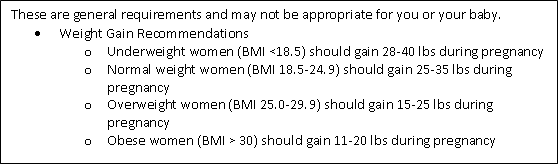
The amount of weight a woman should gain during pregnancy varies according to her pre-conception weight. For instance, it is advised that women who are of “normal” weight (according to the Body Mass Index (BMI), (refer to chart) gain approximately 25-35 pounds (approximately 1 pound/week during the second and third trimesters) whereas overweight women should gain approximately 15-25 pounds (0.6 pounds/week during the second and third trimesters) during their pregnancy.

Healthy Weight Gain During Pregnancy by BMI

Folic Acid
Folic acid is a B vitamin that is essential during pregnancy as it is required for the rapid replication and growth of cells of both the fetus and the placenta (organ that connects the uterus of the mother to the developing fetus). In the fetus, folic acid is essential for the formation of the neural tube, which gives rise to the brain and spinal cord. If levels of folic acid are not adequate, the neural tube may be improperly formed (called a neural tube defect), which can lead to anatomical defects in the brain and spinal cord.

In addition to helping with placental development in the mother throughout pregnancy, folic acid is vital during the second and third trimesters for the production of new red blood cells, whose numbers increase in order to carry a greater amount of oxygen to the developing fetus.

Folic acid levels are often low in women, especially if prior to conception, oral contraceptive pills had been used for a long period of time (oral contraceptives lower the dietary absorption of folic acid and increase the rate that it is broken down in the body). Dietary sources of folic acid (green leafy vegetables, legumes, egg yolk, sunflower seeds) are generally insufficient to ensure women have adequate levels of folic acid, thus supplementation is advised.

Iron
During pregnancy there is a dramatic increase in the number of red blood cells (red blood cells carry oxygen from the lungs to the tissues of the body) required to meet increased oxygen needs. Due to this change, pregnant women require an increased amount of iron. If iron intake is not increased or is inadequate during pregnancy (resulting in iron deficiency), several negative outcomes to both the mother and child can occur. Like folic acid, it is common for iron deficiencies to occur in women prior to becoming pregnant and in women who are pregnant. As deficiencies are common, it is important for a woman’s iron status to be tested, and depending on results of the test, supplementation with iron may be required (amount of supplementation varies according to test results).

Vitamin A
Vitamin A is readily available in most people’s diets (from the consumption of meats, eggs, dairy products and dark green and yellow/orange vegetables). Vitamin A is involved in the development of all major organs and tissues of the body. Additionally, it is important to the development of the immune system and deficiencies during pregnancy have been linked to the development of night blindness in the child. A note of caution regarding vitamin A – taking supplements with high levels of vitamin A can increase the risk of birth defects if it is taken during the first trimester of pregnancy. Thus, it is best to avoid supplementation as it can be easily obtained from food.

If you are pregnant, or thinking about getting pregnant, it is important to consult a health care professional about what nutritional requirements you require to give birth to a healthy child and to have a healthy pregnancy. As a naturopathic doctor, I work with women who are planning/trying to conceive and with expecting mothers to create a plan to meet their individual nutritional requirements, exercise and physical activity requirements, and to help promote a healthy pregnancy.

Graham Beaton is a Doctor of Naturopathic Medicine in practice at Ottawa Collaborative Care Centres – 102 Lewis Street, Ottawa ON. If you have questions about prenatal nutrition, prenatal health, or how Naturopathic Medicine can help you, please call 613-290-6115.

Tags: , , , , , , , ,

Upcoming Health Seminar – Reducing High Blood Pressure

Description:
Heart disease is the leading cause of death in Canada today. An important risk factor that contributes to the development of heart disease is high blood pressure. As the majority of Canadians will develop high blood pressure at some point in their lives, it is important to take steps to promote and maintain healthy blood pressure. Come and learn more about blood pressure, and how to reduce your risk of developing heart disease.

This seminar will focus on the following:

  • Description of high blood pressure and hypertension
  • Methods of evaluation and diagnosis
  • Risk factors for developing high blood pressure
  • Description of management

Presenter:
Graham Beaton BHSc, ND
Doctor of Naturopathic Medicine
Common Ground Collaborative Care

Location:
Sunnyside Public Library
1049 Bank Street, Ottawa

Date and Time:
Wednesday January 23rd, 2013 at 2 pm

Registration:
To register for this free event, please contact the Sunnyside Public Library or call 613-290-6115.

Tags: , , , , , ,

Upcoming Health Seminar – Reducing High Cholesterol

Description:
High cholesterol is an important risk factor for developing cardiovascular disease. Thus, it is important to understand the role of cholesterol in heart disease, know how and when you should be tested, and what is a healthy cholesterol level is for you. Come and learn more about cholesterol, and what you can do to potentially lower your cholesterol levels and promote a healthy heart.

Topics of this seminar will include:

  • Description of high blood cholesterol
  • Explanation of cholesterol evaluation
  • Description of management

Presenter:
Graham Beaton BHSc, ND
Doctor of Naturopathic Medicine
Common Ground Collaborative Care

Location:
Sunnyside Public Library
1049 Bank Street, Ottawa

Date and Time:
Thursday March 21st, 2013 at 7 pm

Registration:
To register for this free event, please contact the Sunnyside Public Library or call 613-290-6115.

Tags: , , ,